My vocation: “A fighter and a screamer”
A recent promotion at my day job has me correcting my own vision when it comes to what matters.

This year started with my workplace team going indoor skydiving, one of countless “no one told me that being a writer would lead me here” moments I’ve had in the course of adulthood.
I was incredibly excited before our “jump,” given that I love just about anything that helps me synthesize adrenaline. But as someone who is also perpetually and painfully body-conscious, I worried about doing it wrong. I have never been athletic, and I was about a month and a half out of a hospitalization, and I still had significant muscle atrophy from the months that had necessitated it. How would I do, holding my body level against the force of the wind?
I stepped into the wind chamber to meet our gracious instructor. I felt what it is to be weightless.
I immediately knew I’d be fine.
What followed was utter exhilaration. I motioned that I wanted the addition of high flying up and down the cylinder that holds the powerful blast of air, and like space suit-clad butterflies, the instructor and I pinwheeled up and down. I felt my face blossoming wide open in fierce delight.
This was something new. This was something utterly unexpected. This was freedom.
Someone with a background like mine — with the trauma, the abuse, the poverty, the illness — had no business doing anything like this. It defied all credulity. Yet here I was anyway.
I couldn’t stop laughing at the miracle of it, the joy.
This week, I took on a new title at my human rights day job — the fourth title I have held in about as many years. I’ve been reflecting a lot on this, my second career, which still feels more like a sapling than the rooted, weathered, gnarled thing of endurance that is my time as a writer in the music industry.
I have decided, out of personal protection, to create more public separation between myself and the details of the (often dangerous) work I do. But by now, it’s well enough known that I work for a global nonprofit that serves survivors of exploitation. My role in this work has grown with each year.
This year, that growth has included the most personally costly season of work yet. So much so that my medical team, including members who have been providing me care for years at this point, have said that they feel like it’s the first time they’ve often been straight-up treating symptoms of just my job, not my myriad other conditions. The work is a beautiful, sacred thing. It is also exacting, in some ways I never really could have anticipated.


Add that to the fact that I find myself trying to explain why I choose to stay in the workforce at all, given my health. The answer is some complex tangle of necessity (my medical bills are wince-worthy), childhood trauma that tells me the people I love are only safe if I’m working to the point of suffering, and a cowardly fear of the unoccupied days I see stretching like the silent stillness of black ice around many of my fellow patients with chronic illnesses.
But if I’m speaking from my chest, from my truest self: I have clawed my way here with some wild combination of hope, privilege, and my own stubborn fingernails. I don’t want to let go now, no matter how sick or sad I get. I don’t think I’m done yet.
There is a story I could tell about all of the jobs I’ve had since I was first sent to work around age 8. It would be a scrappy story of rugged individualism, of bootstrapping, of raw achievement, of my suffering being granted meaning through baptism into semi-stability.
But that’s not the story I want to tell.
I don’t want to tell a story where every impoverished little girl who is taught not to want, taught that she is not allowed to speak in front of those with authority, taught to go without, has to break their heart and their body to climb into the middle class.
That story is an American classic. It’s also boring as hell.
I did utterly spend myself to build what I have now, multiple times. And it worked. But I increasingly feel that it shouldn’t have had to.
Spirits shouldn’t have to break so that bank accounts break even, that terrible calculated equation of human pain.
To me, this is antithetical to my core belief in grace: this idea that to be human is to jettison the economics of deserving. That to be human is actually to be needy of love, to need to give love, to be in a constant give/receive harmony that is the only way we can be whole.
If I rely on my own deservingness of building anything that societal consensus would deem success, I find myself in a kind of frantic panic. I’ve fallen prey to the mindset too many times, to my shame. It was almost easier when that was entirely out of reach, when I was a girl with a veil over her head every Sunday in a tiny Texan chapel, rarely owning shoes that fit, only existing to eventually marry and bear children and keep a house somewhat clean.
I was never supposed to have a career. I accidentally have two, as a side effect of just caring about things (music, stories, human rights) so incurably that I keep finding new ways to care more efficiently. Along the way I have been given a few boosts of blind luck, and the aid of some privilege as a cis white woman. I owe special thanks to startling grace from other women whose leadership I have worked under: Ginger, Deborah, Amber, Laura.
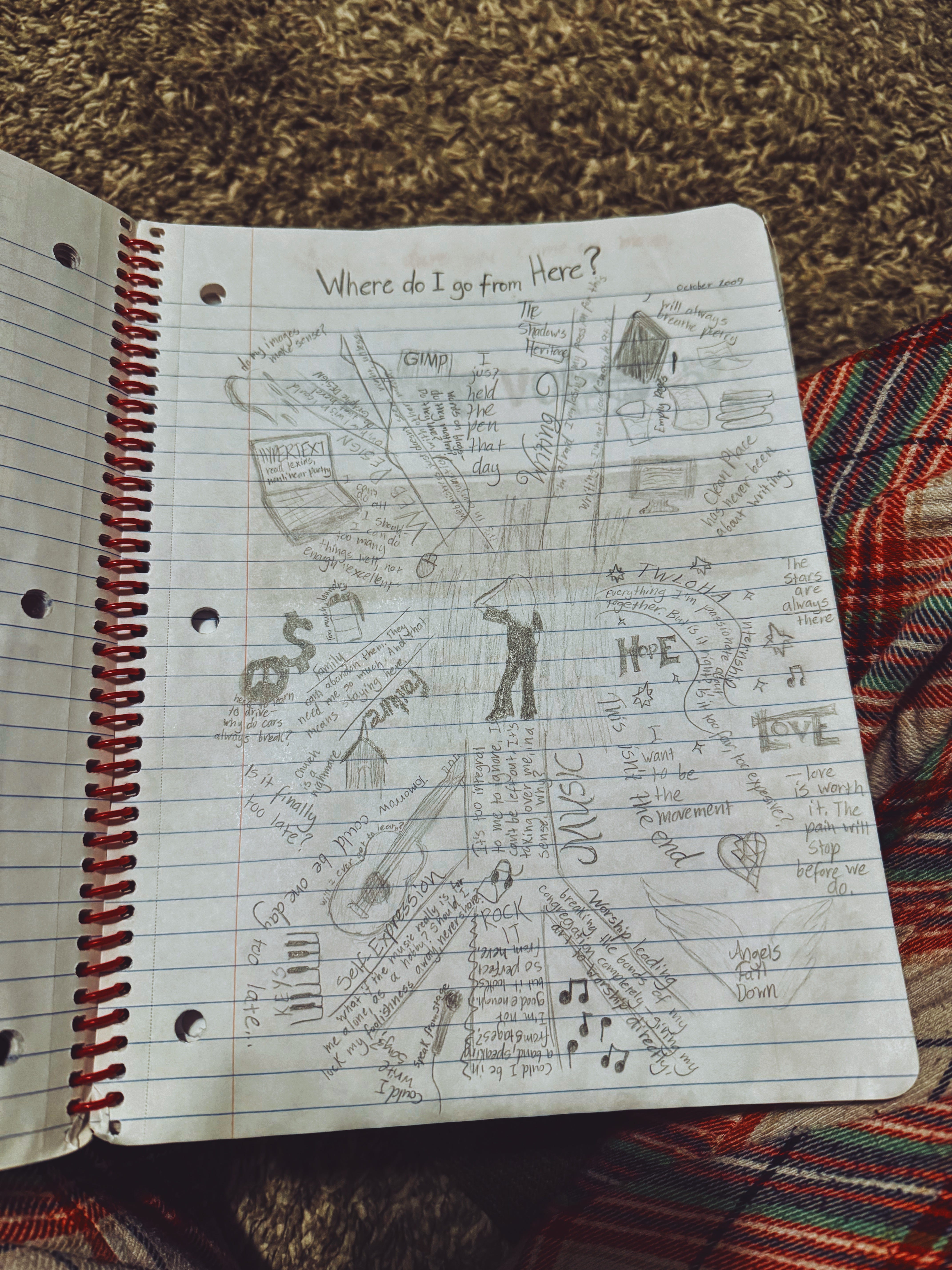
I can mostly forget where I come from, until some subtle reminder slips out from between the pages of a book, or manifests in a body that keeps the score. But I still worry that people can smell it on me: the poverty. My “I’m not from here” immigrant/missionary daughter mannerisms. My utter obliviousness to wanting to climb a career ladder (a ladder I had never even seen until I was in my 20s — rungs, options, are a privilege of the not-poor).
So often, I find myself feeling terribly small. I spent years catching up on all the pop culture I missed while being homeschooled deep in religious fundamentalism, raised by parents who did not grow up in the States.
But it turns out that absolutely nothing could have caught me up on how to be middle class. It is a learning curve that still leaves me winded.
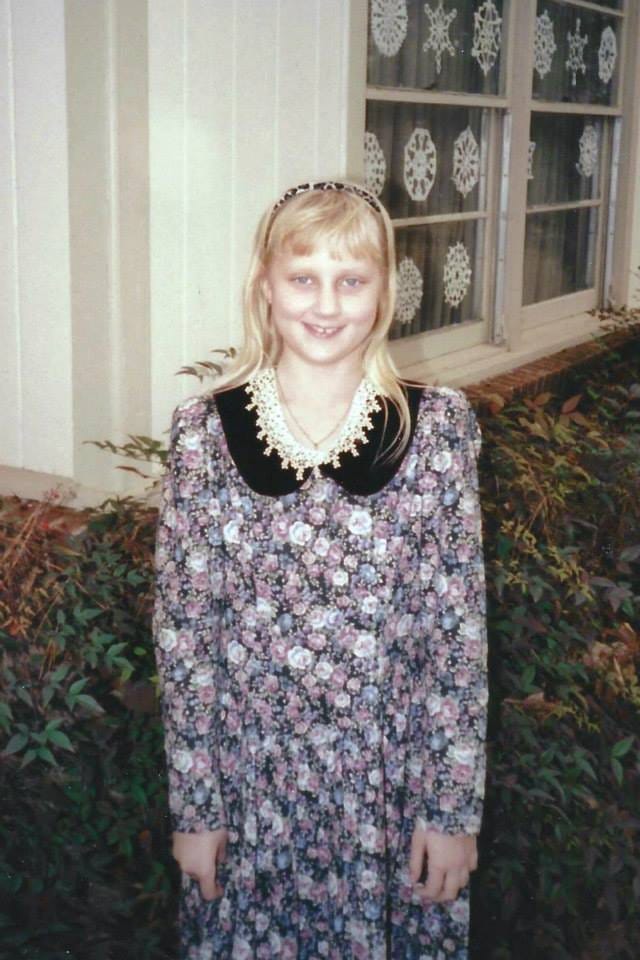
I struggle to make sense of my story: how I can be more professionally successful, by just about every metric I know of, than I ever anticipated, while incredibly unsuccessful at getting physically and mentally well. How I could both have put forth enormous effort to be where I am and also understand it as nothing but sheer grace.
I have to keep returning instead to something someone recently told me when I was in a moment of great angst about where I’m supposed to be in this season of work/life balance: “your vocation is not what you do for work. Your vocation is who you are.”
My shoulders loosen a little every time I think of it, when I throw out the linear progression of profession entirely.
I have been a custodian, a secretary, a librarian, a food service cashier, a ride-share driver, a freelance graphic designer, a photographer, a journalist, a university marketing specialist, a rock and roll publicist, a nonprofit marketing professional, and many other things. And I have always been myself, at every single one of those jobs.
I have always sought, to the best of my ability given my age and the resources I had at the time, to do some very simple things: to move from the overflow of grace. To be of service. To be truthful. To be empathetic. To be creative. To be a student of people and life. And, when the time comes, to leave each chapter well.
Whether scrubbing toilets or compiling a trauma-informed handout for Homeland Security to share with law enforcement. Whether throwing toilet paper at a crowd of 100,000 on stage with A Day to Remember or dressing up as Galadriel deep in the mountains. Whether laughing through waterfall spray in a fjord in New Zealand or quietly driving a very hungover young gentleman home from a Nashville apartment he didn’t remember going to. Whether letting my 3-year-old niece sit on my lap and steal all my rings (shrieking “PRETTY!”) or riding an ATV around a millionaire’s estate in Hawaii.
Some of that made me money. Some of it didn’t. All of it was authentic to me. All of it mattered.
My career is a story that will only ever make about as much sense as a writer indoor skydiving.
My vocation is simply to be Mary: awkwardly earnest in all things, somewhere between life and death, soul-led until I gently close the door on my days.
I hope to make the burden lighter for others along the way — to alleviate some of the cycles of poverty that I had to shatter parts of myself to get free from, like a prisoner breaking her hand to slip free of a shackle. To set a table wide enough that differences in class and creed are recognized as reason for celebration and collaboration to create equity, not exclusion. To soar from abundance where I once felt held down by the clammy granite of scarcity.
I recently happened to stumble on an interview I gave the year I started my current job (which was my first W2 position after a few years of full-time freelancing and soul-searching, AKA existential crises). I was pierced to the core by the words of a younger self.
“Ultimately, forging my own path has meant constantly returning to my beliefs about what matters, and then showing up to be a part of it. I have never had a 5 year plan. I have never had a strategy for advancing my career. All I’ve ever had is a lot of deep love for the profound and painful stories I see around me in this world. I’ve chased those stories and the chances to tell them all the way into a life that feels so deeply rewarding.”
I hope to keep doing the same. And that hope is battle-tested. That hope is a scrappy thing, after the year I’ve had, the life I’ve lived. That hope reads a little like these words from Mary Oliver, which have been giving me hope lately in a hard season:
“In the winter I am writing about, there was much darkness. Darkness of nature, darkness of event, darkness of the spirit. The sprawling darkness of not knowing. We speak of the light of reason. I would speak here of the darkness of the world, and the light of _______. But I don’t know what to call it. Maybe hope. Maybe faith, but not a shaped faith—only, say, a gesture, or a continuum of gestures. But probably it is closer to hope, that is more active, and far messier than faith must be. Faith, as I imagine it, is tensile, and cool, and has no need of words. Hope, I know, is a fighter and a screamer.”
—Mary Oliver, “Winter Hours”
Here’s to the fighters and the screamers. Here’s to hope.